Powered By Blogger
Mostrando postagens com marcador Congressos e Eventos. Mostrar todas as postagens

domingo, 10 de agosto de 2014

Invitation to sandpit - The Moral Economies of Children and Young People's Health and Well-being in the Age of Austerit

Dear all,
Please find below details of a sandpit event to be held at the University of Leeds from 1pm – 5.00pm on Wednesday 3rd September.
The Moral Economies of Children and Young People’s Health and Well-being in the Age of Austerity
1.00pm – 5.00pm, 3rd September 2014
University of Leeds, Business School Maurice Keyworth SR (G.31)
(see map at this link, http://www.leeds.ac.uk/site/custom_scripts/campus_map.php
Building information http://www.teachingspace.leeds.ac.uk/building_details.asp?ID=27)

Following the global financial crisis of 2008-09 children and young people in the OECD and EU, and in the developing economies of Asia, Africa and Central and South America face the prospect of growing up with greater levels of risk and uncertainty brought about by political instability, conflict, climate change and technological and cultural change. Reflecting some of these concerns, researchers have sought to engage with the ways in which locally produced cultures of childhood and youth are shaped by global forces, highlighting the absence of considerations of childhood and youth from discussions related to the global financial crisis (Morrow, 2011). This lack of attention to children and young people is also evident in the health related disciplines where the widely acknowledged view that ‘austerity kills’ (Stuckler and Basu, 2013) is a central tenet of research examining widening gaps in health inequalities, decreased investment in health care systems and health promotion, and the impact of unemployment on mental and emotional health, food insecurity and the lifestyle choices of individuals. In this one day event we aim to bring together researchers interested in developing research proposals related to the global economic and political forces that shape the possibilities for children and young people’s health and well-being. The event is intended to be an open and interdisciplinary discussion facilitated by lead partners: Peter Kelly, RMIT University; Deana Leahy, Monash University; and Jo Pike, University of Leeds, UK. It is intended that this event will lead to interdisciplinary and international collaborations that will form the basis of future research proposals. The aim of the workshop is to identify the key questions related to young people’s health and well-being in the age of austerity. Such questions might include:
• What are the significant health and well-being challenges for children and young people in the 21st Century?
• How are these health and well-being challenges configured differently in different geographical locations?
• What possibilities do the shifting relationships between the state, the private sector, the Third sector (NGOs), social entrepreneurs and other relevant actors present for addressing contemporary health and well-being challenges for children and young people?
• How are the moral imperatives of health and well-being reshaped in the age of austerity?
• How have contemporary discourses of children and young people’s health and well-being shifted in relation to the global financial crisis?
• How has the global financial crisis reconfigured children and young people’s notion of futurity and how might this align with aspirations to promote their health and well-being?
• How do young people negotiate and engage with the different attempts to shape their health behaviours?
Places at this event are limited so if you are interested in registering please email Jo Pike j.pike@leeds.ac.uk by Friday 22nd August. There is no cost for attending this event.
Attendees are invited to join us for dinner following the event.
The event is intended to promote free and open interdisciplinary discussion facilitated by lead partners: Peter Kelly, RMIT University, Australia and Jo Pike, University of Leeds, UK. The aim of the workshop is to identify the key questions related to young people’s health and well-being in the age of austerity with the intention of developing interdisciplinary and international research collaborations that will form the basis of future research proposals.

This is a free event but places are limited. Please register your interest by email to Jo Pike j.pike@leeds.ac.uk by Friday 22nd August.

sábado, 1 de março de 2014

16º Seminário FNLIJ Bartolomeu Campos de Queirós

Sobre a Importância da Fantasia na Literatura

    “A literatura, se construída de fantasia, é feita do que não temos. Só fantasiamos sobre o que sonhamos. Fantasiar é noticiar ao mundo que ainda tenho desejos. Fantasiar é festejar a vida”.
Bartolomeu Campos de Queirós – “Para Ler em Silêncio”

Diante das inúmeras censuras em nome do politicamente correto escolhemos A FANTASIA como tema para o 16º Seminário FNLIJ Bartolomeu Campos de Queirós.
Em homenagem ao grande escritor, educador e pensador Bartolomeu Campos de Queirós, que nomeia este seminário, fomos buscar inspiração para a reflexão e o debate sobre o tema nos seus inúmeros escritos.
Neste ano em que a FNLIJ comemora o 40º aniversário da realização do 14º Congresso do IBBY realizado no Brasil cujo o tema foi O Livro Como Instrumento na Formação e no Desenvolvimento da Criança e do Jovem convidamos a todos que se interessam pela formação de leitores por meio da literatura, professores ou pais para participar dessa discussão.
O Seminário Bartolomeu Campos de Queirós tem por objetivo refletir com profissionais e interessados das áreas de educação e cultura a necessidade e importância da leitura de livros de qualidade.
O Seminário ocorre durante a programação do 16º Salão do Livro FNLIJ para Crianças e Jovens.
O 16º Salão do Livro FNLIJ para Crianças e Jovens irá acontecer de 28 de maio a 08 de junho de 2014. O Salão já se tornou parte do calendário cultural do Rio de Janeiro e será realizado no Centro de Convenções Sul América – Centro – Rio de Janeiro. O Salão FNLIJ do Livro para Crianças e Jovens é um projeto pioneiro de caráter institucional, por ter criado no país uma feira exclusivamente de livros de literatura e informativos para esse público e por introduzir a presença de biblioteca em recinto de feiras de livros.
Além da programação de 3 dias, que segue abaixo, a FNLIJ inaugura no espaço do Salão um momento de comunicações acadêmicas para pesquisadores interessados a expor seus trabalhos sobre A Fantasia na Literatura.
O 16º Seminário acontece nos dias 02, 03 e 04 de junho de 2014.
Nestes 3 dias contaremos com a seguinte programação:
1º Dia - Dedicado à Literatura na Argentina
2º Dia - XI Encontro de Autores Indígenas com o tema “Literatura indígena, a bola da vez”.
3º Dia – Iremos refletir sobre a literatura por meio de temas tratados no 14º Congresso do IBBY realizado pela FNLIJ no Rio de Janeiro há 40 anos atrás, em 1974.

Comunicações

Este ano a FNLJ buscando aproximar a produção acadêmica sobre leitura, literatura para infância e juventude convida pesquisadores interessados a realizarem comunicação durante o período de 04 a 06 de junho de 2014.
Os trabalhos devem conter reflexões de pesquisas em andamento ou concluídas que dialoguem com os 4 temas propostos pelo 14º Congresso em 1974, em seu relatório final, a saber:
1. O livro infantil, sua criação, produção e promoção
2. A aproximação criança – livro
3. A formação e a preparação do adulto para fazer a aproximação entre a criança e o livro
4. O trabalho internacional com o livro infantil

Os trabalhos devem tratar o percurso desses temas ou apenas um deles, nos últimos 40 anos ou abordar a situação atual. Entendemos que estes temas são estruturantes nos processos de promoção da leitura literária e assim devem propor a reflexão sempre.
Regras para envio:
Os interessados em fazer comunicação devem enviar resumo em até 2.500 caracteres, até o dia 10/04. Os resultados dos trabalhos selecionados será comunicado entre 20/04 e 25/04.
Cada comunicação terá o tempo de 15 minutos para apresentar e poderá contar com data- show.
Pelo menos uma (1) pessoa, caso a comissão seja trabalho de equipe, terá que realizar a inscrição no 16º Seminário FNLIJ Bartolomeu Campos de Queirós.
A FNLIJ irá compor a comissão científica que irá julgar os trabalhos selecionados. Os critérios para seleção pautam desde a clareza das ideias no texto até a correspondência com a proposta. Os selecionados deverão enviar o trabalho compilado na íntegra assim como suas imagens, se houver. Esses trabalhos serão publicados no site da FNLIJ. Maiores informações: FNLIJ - tel: 21 – 2262 9130; e-mail: seminario@fnlij.org.br

terça-feira, 11 de fevereiro de 2014

Primeira Circular IV Simpósio Memória, (Auto)biografiae Documentação Narrativa - 07 a 09/04/2014 - UNEB

Informações sobre o IV Simpósio MEMÓRIA, (AUTO) BIOGRAFIA E DOCUMENTAÇÃO NARRATIVA

Encaminhamos informações sobre o IV SIMPÓSIO MEMÓRIA, (AUTO) BIOGRAFIA E DOCUMENTAÇÃO NARRATIVA, que acontecerá entre os dias 07 a 09 de abril de 2014, na Universidade do Estado da Bahia.

Busca-se na IV edição do Simpósio aprofundar questões teórico-metodológicas sobre biografias e documentação narrativa, nos domínios das práticas formativas no campo educacional em diálogo com diferentes fontes e perspectivas de análise. Do mesmo modo, o simpósio amplia redes de pesquisas e colaboração entre pesquisadores brasileiros, latino-americanos e europeus que têm assumido a pesquisa (auto)biográfica como perspectiva de investigação-ação-formação.

O Simpósio é promovido pelo GRAFHO (PPGEduC/UNEB), com apoio da Associação Brasileira de Pesquisa (Auto)Biográfica (BIOgraph), da Associação Internacional das Histórias de Vida em Formação e de Pesquisa Biográfica em Educação (ASIHVIF-RBE), da Rede Latinoamericana de Pesquisa Narrativa, (Auto)biografia e Educação (RedNAUE), da Rede Científica de Pesquisa Biográfica América Latina - Europa (BioGraFia),do Colégio Internacional de Pesquisa Biográfica em Educação (CIRBE) e da Associação Norte e Nordeste das Histórias de Vida em Formação (ANNIHIVIF).


Para outras informações sobre o Simpósio e inscrições, consultar o site:
http://www.ppgeduc.com/simposiomemoriaautobiografia

As inscrições acontecerão nos seguintes períodos:
De 14/02 a 07/03/2014 – Com apresentação de trabalho
De 18/02 a 22/03/2014 – Sem apresentação de trabalho

As inscrições serão realizadas na Secretaria do GRAFHO (CPEDR/UNEB) ou através do e-mailgrafhouneb@uol.com.br

quarta-feira, 22 de janeiro de 2014

II SIMPÓSIO LUSO-BRASILEIRO EM ESTUDOS DA CRIANÇA – Pesquisa com crianças: desafios éticos e metodológicos

Com o objetivo de promover um debate entre pesquisadores na área de Estudos da Criança no que se refere à pesquisa com crianças - buscando aí similaridades, regularidades, ausências, presenças e urgências -, convidamos os pesquisadores a apresentarem os seus trabalhos no II SIMPÓSIO LUSO-BRASILEIRO EM ESTUDOS DA CRIANÇA – Pesquisa com crianças: desafios éticos e metodológicos, que será realizado nos dias 25 e 26 de agosto de 2014, na Faculdade de Educação da Universidade Federal do Rio Grande do Sul, em Porto Alegre, Brasil. O objetivo, assim, é contribuir para o diálogo entre as diferentes áreas e tópicos temáticos relativos às infâncias, aos estudos da crianças e à pesquisa com crianças.

Maiores informações:
http://www.estudosdacrianca.com.br/site/capa


III Congreso Internacional “Arte, Ilustración y Cultura Visual en Educación Infantil y Primaria: Tecnologías de la imagen, espacios de experiencia educativa y acontecimientos visuales“

Montevideo (Uruguay), 14-16 octubre 2014


Sobre la III edición: Tecnologías de la imagen, espacios de experiencia educativa y acontecimientos visuales
Esta edición del Congreso nos convoca a pensar en tres líneas de trabajo respecto a su título.
Una de las orientaciones ha de tener que ver con la construcción de la imagen orientada a la infancia. En tal sentido, exploraremos qué herramientas y qué criterios estéticos son utilizados en la producción de imágenes para niñas y niños. Identificaremos las narrativas y los discursos relacionados con las imágenes que representan, exploran y configuran la idea de infancia.
La segunda línea de elaboración nos lleva a pensar los usos de la imagen orientada a la infancia.Pretendemos indagar qué sucede con estos usos en los entornos digitales y la red 2.0; en las instituciones educativas y culturales (expositivas, museísticas, creativas); y en los espacios sociales (barriales, comunitarios).
Una tercera posibilidad de abordaje del tema general nos permitirá reflexionar colectivamente acerca del estado de la investigación sobre la imagen orientada a la infancia. En tal sentido, nos resulta relevante pensar en las maneras de representación; las formas de mirada y comprensión; y los caminos de la interpretación visual.
Maiores informações:
http://congresoarteilustracion.org/

OMEP ARGENTINA


Convocatoria para la presentación de experiencias educativas

El *7º Encuentro Internacional de Educación Infantil* organizado por OMEP: +"Arte en la Primera Infancia: debates teóricos y propuestas didácticas"+ se llevará a cabo el *9, 10 y 11 de mayo de 2014* en la Ciudad de Buenos Aires. En el marco de dicho Encuentro, convocamos a la presentación de *+EXPERIENCIAS EDUCATIVAS+ llevadas a cabo con niños menores de 8 años* (en ámbitos escolares, comunitarios, hospitalarios, etc.) que estén relacionadas con la temática que en esta oportunidad nos convoca. Para más información, haz click en el título de este artículo.
Maiores informações:
http://www.omep.org.ar/article/convocatoria-experiencias-2014/

sexta-feira, 6 de dezembro de 2013

CONVITE - IV ENCONTRO INTERNACIONAL DAS LINGUAS E CULTURAS TUPI


Temos a honra de convidá-lo (la) para conosco participar do IV ENCONTRO INTERNACIONAL DAS LINGUAS E CULTURAS TUPI, que será realizado no município de Ji-Paraná, estado de Rondônia, matriz da cultura tupi. O evento tem o objetivo de promover a interinstitucionalidade e a cooperação interdisciplinar para o enriquecimento das pesquisas e para o reconhecimento do progresso nesse campo. A meta principal é promover o diálogo e a cooperação entre pesquisadores de diferentes áreas, não só no nível acadêmico, mas também na aplicação dos resultados de suas pesquisas em benefício do fortalecimento das línguas, das culturas e também da integridade física, psíquica e social dos povos Tupi.

LOCAL: MAXIMUS HOTEL E UNIVERSIDADE FEDERAL DE RONDÔNIA
PERÍODO: 10 a 12 de dezembro de 2013

quarta-feira, 4 de dezembro de 2013

Chamadas para Eventos 2014

ERPA INTERNATIONAL CONGRESS ON EDUCATION
CALL FOR PAPERS

DEAR COLLEAGUE,
IT IS WITH GREAT PLEASURE THAT I AM WRITING TO INFORM YOU ABOUT THE
/INTERNATIONAL ERPA CONGRESS ON EDUCATION 2014/ THAT WILL BE HELD IN
/ISTANBUL UNIVERSITY/TURKEY/ FROM /6 TO 8 JUNE
2014/ (HTTP://WWW.ERPACONGRESS.COM). WE HOPE THAT THE CONFERENCE WILL ENABLE YOU TO SHARE YOUR RESEARCH WITH AN INTERNATIONAL RESEARCH COMMUNITY AND TO
ENGAGE IN DISCUSSION ABOUT THE CURRENT ISSUES IN THE FIELD OF EDUCATION.
THE SCIENTIFIC COMMITTEE IN ERPA CONGRESS AIMS TO KEEP THE LEVEL OF THE
PRESENTATIONS AS HIGH AS POSSIBLE SO THAT IT IS A POSITIVE INTELLECTUAL
EXPERIENCE FOR ALL THE PARTICIPANTS. THEREFORE, WE WANT YOU TO REMEMBER
ERPA CONGRESS AS A PLACE WHERE YOU DISCUSSED THE ISSUES AND QUESTIONS THAT
COUNT FOR YOUR RESEARCH, RENEWED RELATIONS WITH YOUR COLLEAGUES AND MADE
CONTACTS THAT HELPED YOU TO DEVELOP NEW DIRECTIONS IN YOUR WORK.

SIX BRANCH CONGRESS WILL BE HELD CONCURRENTLY IN ERPA CONGRESS 2014;
* ERPA International Educational Sciences Congress
* ERPA International Science and Mathematics Education Congress
* ERPA International Social Sciences Education Congress
* ERPA International Health and Physical Education Congress
* ERPA International Art Education Congress
* ERPA International Special Education Congress

IT IS A PLEASURE TO SHARE WITH YOU THAT WE ARE CONTRACTED WITH ELSEVIER
LTD. FOR PUBLISHING ERPA CONGRESS 2014 PROCEEDINGS IN /PROCEDIA-SOCIAL AND
BEHAVIORAL SCIENCES/ WHICH IS INDEXED ON THE /SCIENCE DIRECT, SCOPUS AND
ISI WEB OF KNOWLEDGE/. THE PROCEEDINGS SHOULD BE WRITTEN IN GOOD ENGLISH
AND SHOULD BE /3 TO 6 PAGES/ IN LENGTH.

THANKS FOR YOUR CONSIDERATION AND WE LOOK FORWARD TO MEETING ALL OF YOU IN
ISTANBUL UNIVERSITY, ISTANBUL, TURKEY.

BEST REGARDS,

/Organizing Committee of ERPA Congress 2014///

/Istanbul/Turkey/

http://www.erpacongress.com//
IMPORTANT DATES
ABSTRACT SUBMISSION DEADLINE: /6 MAY 2014/
REGISTRATION DEADLINE: /15 MAY 2014/
FULL PAPER DEADLINE: /20 JUNE 2014/
ERPA CONGRESS: /6-8 JUNE 2014/

********
EECERA 2014
Call for Papers
Dear EECERA friends,

The EECERA 2014 Conference is taking place in the beautiful island of Crete in Greece from 7th – 10thSeptember 2014.

The conference theme ‘US, THEM & ME: Universal, Targeted or Individuated Early Childhood Programmes’ has been created to generate an active and participatory dialogue which focuses on quality, social justice and equity in early childhood education (ECE) programmes. Worldwide, the evidence is clear about the beneficial impact of quality ECE, economically, socially and educationally. It has been shown to have the capacity to open up possibilities and opportunities for all children for lifetime achievement and fulfilment. It has also been shown that poor quality ECE exacerbates inequalities. The 24th EECERA conference will explore this overarching theme through three perspectives:

1. Should ECE programmes be universally accessible and affordable to all?

This perspective explores the role and functions of ECE programmes within societies at different levels of economic development and wealth. What is the contribution of ECE to societal development and well being? What are the benefits of creating an open, accessible ECE system for all children and families, regardless of income or position? What might such a system look like and what should it offer? What is the role of the state in funding and regulating such a system? What is the contribution of Non-Government Organisations (NGO) or free enterprise markets in such a universal system? In an area where such an important lifelong contribution to human development and equality is made should ECE be universally available and, if so, of what should it consist? Who has a voice in these decisions and how far are they heard and with what response?

2. Should resource-rich programmes be targeted only at supporting those in greatest need?

This perspective explores how societies and communities address the issue of distributing ECE programmes during a time of scarce and diminishing financial resources. If ECE influences social mobility then how far should state funded ECE programmes focus only on those with the greatest need? Is ECE predominantly about ‘school readiness’ or more than that? Should intervention programmes focus on the ‘basics skills’, especially for those children, facing the greatest challenges? What place do intervention programmes across health, parenting and family support have to play in addressing these inequalities? Who participates in decisions about the deployment of scarce resources? Who are the beneficiaries and what do those who are targeted feel about their participation in such programmes? How far do those who are targeted have a voice in the process of their identification and participation in such programmes?

3. Is ‘quality’ in ECE a universal concept or should it be individuated to context, and adapted to accommodate different social and cultural constructs of childhood?

This perspective explores how far there can and should be a notion of a universal approach to ECE. As more evidence is accumulated about the conditions which optimise young children’s development and learning, how far can this knowledge be used to generate cross cultural ECE programmes which have universal application in different contexts and communities? Or does maturational, cultural and social diversity require individuated, differentiated programmes which can directly reflect local values, traditions and expectations? How are ECE programmes created and developed? Who is involved in the process of knowledge and system creation and whose voices shape priorities? Who has the knowledge about what works, is it universal and how is it controlled and disseminated?

Strands are:

Values and value education; Culture, community & society; ECEC contexts, transition & practices; Children’s rights, democracy & participation; Play & learning; Diversity & inclusion; Innovative/alternative approaches; Learning environment; Professionalism & teachers’ role; Leadership & quality; Curriculum & assessment; Paradigms, theories & methodologies; International research in ECEC.

Proposals can be submitted for:
Individual paper presentation: 30 minutes including discussion. Individual papers will be grouped into larger symposia by theme.
Self-organised symposium: groups may propose to organize 3 papers and a moderator around a common theme as a full session of 90 minutes including discussion. For self-organized symposium, please submit one abstract for each of the papers.
Poster presentation: selected posters will be displayed, and sessions will be set up for conference participants to interact with poster presenters.

When submitting your proposal, follow the instructions on the website. You will be asked to enter the following information:
The title of the presentation
The type of presentation (individual paper for a themed symposium, self-organised symposium, poster)
The name/s and institution/s of the presenter/s and co-authors (For multiple authored papers, please indicate which authors will be presenting)
Mailing address and E-mail address
A 250-word abstract (addressing each element specified on the submission form, including theme and strands, the aims of the research, theoretical framework, methodology, ethical considerations, main findings, and implications for practice and/or policy)
Up to five keywords

Please submit all abstracts and proposals for presentations electronically through the conference website http://www.eecera2014.org. This will be launched today (3rd of December 2013). The deadline to submit your proposals is 4th March 2014.
Should you have any enquiries, please email the EECERA 2014 secretariat on enquiries@eecera2014.org
We look forward to seeing you in Crete,
Professor Chris Pascal & Dr Vasilis Grammatikopoulos

EECERA President EECERA 2014 Conference Chair

domingo, 20 de outubro de 2013

19o Congresso de Leitura do Brasil

O 19o Congresso de Leitura do Brasil (COLE), que acontecerá de 22 a 25 de julho de 2014, na Unicamp. O tema do 19o Cole é 'leituras sem margens'
Agradecemos-lhes a divulgação e aguardamos as contribuições no envio dos textos para as diferentes modalidades de apresentação.
Destacamos que, para esta próxima edição do Cole, será possível inscrever trabalhos na categoria Mesas Redondas, propostas e organizadas por associadas/os da ALB.

quinta-feira, 3 de outubro de 2013

Child in the World conference

The Child in the World
One-day conference at the V&A Museum of Childhood
9 November 2013

This conference has been convened as part of the AHRC 'Child in the World' collaborative programme between the MoC and Queen Mary. It will explore the ways in which children imagine, understand and engage with the wider world. The keynote lecture will be given by Karen Wells
(Birkbeck) on 'The child in the world: violence and gendered transitions to adulthood.' Further information, including the conference programme and speaker biographies, is available at:
www.geog.qmul.ac.uk/research/childintheworld/conference/index.html

Please forward to anyone else who might be interested.

quinta-feira, 19 de setembro de 2013

Novas chamadas de artigos e Chamada de Congressos

Artigos Revista Educação, Artes e Inclusão

Chamada de Artigos Revista Educação, Artes e Inclusão
Está aberto o período de submissão de artigos para a Revista Educação Artes e Inclusão ? do Grupo de Pesquisa Educação, Arte e Inclusão da Universidade do Estado de Santa Catarina. Os artigos selecionados
serão publicados no volume 8 número 2 no mês de Novembro de 2013, no site da Revista. Este número será um número especial e o tema abordado é "Linguagem e Ensino".
Os artigos deverão ser submetidos exclusivamente pelo site e o cadastro deverá ser como autor:
http://revistas.udesc.br/index.php/arteinclusao
Informações e esclarecimentos adicionais poderão ser obtidos pelo e-mail: lavaipeudesc@gmail.com

"VIII Congreso Iberoamericano de Didáctica UniversitariadeNivelSuperior"


Rosario 9 de septiembre de 2013.
Estimada/o colega:
Nos comunicamos nuevamente a fin de reiterar la invitación a participar del
VIII Congreso Iberoamericano de Docencia Universitaria y de Nivel Superior
?La construcción de saberes acerca de la enseñanza: un desafío para la
docencia universitaria y de nivel superior?, a realizarse durante los días
21, 22 y 23 de abril de 2014, en la Facultad de Humanidades y Artes de la
Universidad Nacional de Rosario, Argentina. La convocatoria va dirigida a
todos los docentes universitarios y de nivel superior interesados en las
problemáticas de la enseñanza de las diversas disciplinas.
Le remitimos en forma adjunta la Tercera Circular y hacemos propicia la
oportunidad para solicitarle la difusión del evento en la institución a la
que pertenece. Quedamos a su disposición en la dirección electrónica
www.iberoamericano2014.unr.edu.ar para la información y las consultas que
considere necesarias.
Con atenta consideración,
Comité Organizador
VIII Congreso Iberoamericano de Docencia Universitaria y de Nivel Superior

Revista Pergaminho n.º 4/ 2013
Revista discente on-line de Estudos Históricos e Pedagógicos do UNIPAM
(Centro Universitário de Patos de Minas)


Para a publicação de seu quarto número (edição n.º 4/ 2013, com publicação prevista para dezembro de 2013), a Revista Pergaminho está recebendo contribuições de artigos, ensaios, resenhas e traduções, até o dia 14 de outubro de 2013.
A Revista Pergaminho é destinada à produção de pesquisa de alunos da graduação em História e Pedagogia e áreas afins (Ciências Sociais, Filosofia, Ciências Humanas). Sua temática é livre e deve estar adequada às áreas de atuação da revista. As normas de publicação, bem como os endereços para contato, encontram-se abaixo.
PERGAMNHO
Revista discente on-line de Estudos Históricos e Pedagógicos
http://pergaminho.unipam.edu.br
Normas de Publicação

1. Os artigos enviados à Revista Pergaminho serão submetidos a um Conselho Editorial, que irá selecionar os textos a serem publicados.

2. Os originais não devem exceder 20 laudas, digitadas em espaço 1.5, no programa Word for Windows. O texto deverá ser encaminhado para o e-mail da revista.

3. Os artigos devem ter um resumo em português, com 30 a 150 palavras. O resumo deve ser inserido depois do título do artigo e do nome do autor. Junto de seu nome, o autor deverá incluir, em nota de rodapé, com asterisco (*) sua titulação e/ou instituição onde desempenha sua função acadêmica, junto de seu e-mail, se for o caso.

4. Os artigos enviados devem seguir os critérios estabelecidos pela ABNT. Para facilitação no preparo de originais, seguem normas para as quais chamamos atenção:

4.1. Citações bibliográficas curtas (até 3 linhas) deverão estar inseridas no texto. Citações longas (mais de 3 linhas) deverão constituir parágrafo independente, digitadas em espaço um, ou letras menores, recuadas da margem esquerda.

4.2. As citações deverão ser seguidas do sobrenome do autor e ano da publicação (e página, se for o caso), entre parênteses: Ex: (NOVAIS, 1998, p. 175).

4.3. As notas de rodapé estarão restritas a observações pessoais, no sentido de prestar esclarecimentos sobre informações que não estejam no corpo do texto, e deverão ser numeradas seqüencialmente.

4.4. As referências bibliográficas deverão aparecer no final do texto, em ordem alfabética de sobrenome do autor, da seguinte forma:

a) para livro: SOBRENOME DO AUTOR, Nome. Título (em itálico). Edição. Local: editora, data.

b) para artigos: SOBRENOME DO AUTOR, Nome. Título do artigo. Título do periódico (em itálico). Local, volume, número, página inicial e página final do artigo, mês e ano.

c) para artigos de congresso: SOBRENOME DO AUTOR, Nome. Título do artigo. In: NOME DO CONGRESSO , número do congresso, ano, local. Título da publicação (em itálico). Local, editora, data, página inicial e página final do artigo.

5. A Revista Pergaminho reserva-se o direito de alterar os originais, no sentido de adequá-los às normas adotadas por esse padrão editorial.
PERGAMINHO
Revista discente on-line de Estudos Históricos e Pedagógicos
Faculdade de Filosofia Ciências e Letras
UNIPAM – Centro Universitário de Patos de Minas
Rua Major Gote, 808 – Caiçaras
38702-054 Patos de Minas, MG
www.unipam.edu.br
e-mail para envio de trabalhos: pergaminho@unipam.edu.br
Mais informações pelos e-mails:
rassi@unipam.edu.br (Prof. Marcos Antônio Caixeta Rassi, editor)
luis.andre@unipam.edu.br (Prof. Luís André Nepomuceno, Núcleo Editorial)

domingo, 1 de setembro de 2013

I Seminário A Criança e sua Participação na Cidade


É com prazer que convidamos ao I Seminário A Criança e sua Participação na Cidade que será realizado nos dias 20 e 21 de setembro de 2013, no IFCS/UFRJ, no Rio de Janeiro.

O seminário é uma realização do Projeto Criança Pequena em Foco (CECIP), Laboratório de Antropologia Urbana (IFCS/UFRJ) e Fundação Bernard van Leer, visando debater e realizar atividades relacionadas à questão da participação das crianças no processo de construção da cidade.

No 1º dia (20/09 - sexta-feira) com o título Vamos ouvir as crianças?, palestrantes debaterão o sentido e a necessidade de participação infantil. O público presente terá a oportunidade de discutir estratégias a esse respeito. Ao final do dia, será lançada a publicação Vamos ouvir as crianças: Caderno de Metodologias Participativas do Projeto Criança Pequena em Foco, com distribuição aos presentes. O 2º dia (21/09 - sábado) será chamado de Crianças na Universidade, quando serão realizadas oficinas de participação infantil que reunirão crianças e adultos. O encerramento será uma passeata musical, animada pelo grupo Fole e Festa .

Mais informações e inscrições gratuitas: http://www.seminariocriancaesuaparticipacao.blogspot.com.br/

Divulgue na sua rede, lembrando que as vagas são limitadas!

terça-feira, 18 de dezembro de 2012

CfP: "Which discipline do children belong to? Crossroads in research on childhood"

Dear collegues,
The "“Sciences of childhood, Sciences of children” Group is pleased to announce
an international two-day workshop, entitled "Which discipline do children belong to? Crossroads in research on childhood", will be held in Paris on the 23th and 24th of May 2013. Enclosed you will find the Call for Paper.

The workshop will be held at Ecole des Hautes Etudes en Sciences Sociales (EHESS), Salle Lombard, 96, bd. Raspail. Please submit 500 to 600 words abstracts in English or French for proposed papers by 15th January 2013 on the website http://jediscenf2013.sciencesconf.org. Notification of acceptance of paper will be sent by the end of February. Feel free to contact the organization committee for any information at sciencenfance@gmail.com.

Please, send this call to whoever might be interested in contributing to the workshop.
Thank you in advance,

Regards,
The organizers
Alice Sophie Sarcinelli
doctorante en anthropologie
Institut de Recherche Interdisciplinaire sur les Enjeux Sociaux (Sciences sociales, Politique, Santé)
École des Hautes Études en Sciences Sociales, Paris
Médecins du Monde

http://iris.ehess.fr/document.php?id=824


Bonjour,

Veuillez trouver en pièces jointes un appel à communications (en français et en anglais) pour deux journées d'étude internationales organisées les 23 et 24 mai 2013 à Paris intitulées : À quelle discipline appartiennent les enfants ? Croisements, échanges et reconfigurations de la recherche autour de l'enfance.

Ces journées se dérouleront à l'EHESS (Salle Lombard - 96, bd. Raspail). Les propositions sont à déposer sur le site dédié à cette manifestation (http://jediscenf2013.sciencesconf.org/, onglet "déposer") avant le 15 janvier 2013.

Pour toute question, vous pouvez directement contacter les organisateurs à cette adresse : sciencenfance@gmail.com

Merci de diffuser cette annonce dans vos réseaux et auprès des personnes qui pourraient être intéressées.

Bien cordialement,
Les Organisateurs

quinta-feira, 13 de dezembro de 2012

Simpósio Temático 43: Feminismo e Creche: desafios atuais para uma educação descolonizadora


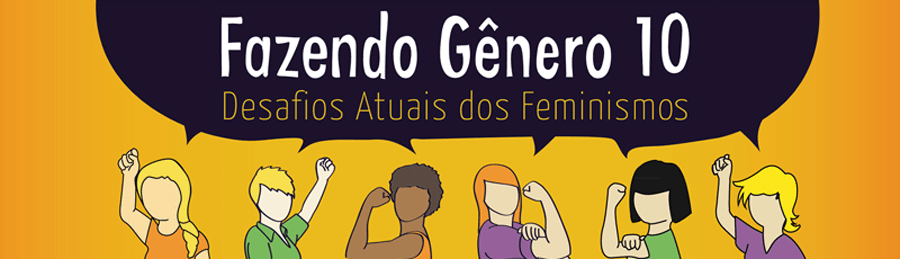
Convidamos a tod@s para participarem do Simpósio Temático 43: Feminismo e Creche: desafios atuais para uma educação descolonizadora, do Seminário Internacional Fazendo Gênero 10 - Desafios Atuais dos Feminismos, que se realizará em Florianópolis, Santa Catarina, entre 16 a 20 de setembro de 2013.
As inscrições para apresentação de trabalhos nos Simpósios Temáticos e para inscrições de Pôsteres estão abertas até o dia 20 de março de 2013.

Mais informações,
http://www.fazendogenero.ufsc.br/10/

quarta-feira, 14 de novembro de 2012

14 Encontro de Geógrafos da América Latina


As inscrições do 14o EGAL, que será no Peru, se encerram agora no dia 30 de novembro, quem desejar enviar trabalhos, maiores detalhes em:
http://www.egal2013.pe/
obs.: inicialmente são inscrições de resumos.

Royal Geographical Society (with IBG) Annual International Conference 2013 - Geographies of Children, Youth and Families Research Group

Call for Sessions

The Royal Geographical Society (with IBG) is pleased to announce that the Call for Sessions and Papers has opened for its Annual International Conference 2013 (AC2013). The conference, which will be chaired by Professor Jonathan Rigg (Durham University), will have as its theme New geographical frontiers.

Please note that the conference has returned to London in August:

Date: Wednesday 28 to Friday 30 August (with an opening reception on Tuesday 27 August)

Location: Royal Geographical Society (with IBG), London

Members of the geographical and related communities are invited to propose sessions for the RGS-IBG Annual International Conference 2013. The Geographies of Children, Youth and Families Research Group (GCYFRG) would like to invite proposals for sessions sponsored by the GCYFRG. We would welcome joint sessions with other research groups.

The RGS-IBG Annual International Conference 2013 has a theme of new geographical frontiers, inviting exploration of the many ways that frontier can be employed as a concept, a metaphor or as a point of empirical focus, such as in geographical theory, inter-disciplinary research, and the contribution and impact of geography in society and economy.

The GCYFRG is inviting session proposals (either GCYFRG sponsored or co-sponsored with other research groups) relating to its general interests in geographies of children, young people and families. Session proposals should link in some way to the conference theme, although this is not absolutely necessary. Further information about the research group and its aims can be found at http://www.gcyf.org.uk/aims.html. Please note that the list of topics stated in the research group’s aims is not exhaustive and sessions relating to other relevant themes will be fully considered.

Sessions may take the form of presented papers, panels, practitioner forums, discussions or workshops. Innovative sessions and formats are encouraged. A small number of sessions containing Skype or other distance presentations can be supported at AC2013, but must be agreed with the conference organisers in advance so they can be scheduled at RGS-IBG for appropriate technical support.

Proposals for, or questions about, GCYFRG sponsored sessions should be sent to Dr Natalie Beale n.h.beale.academic@gmail.com. Proposals should be submitted by 2nd December 2012. Please send proposals to the email address stated and not my Teesside University account.

Dr Natalie Beale
School of Health and Social Care
Teesside University

Fourth International and Interdisciplinary Conference on Emotional Geographies

1-3 July 2013 at the University of Groningen, The Netherlands
Session: Children’s Emotional Geographies: Practical and Policy Matters?
Session Organisers: Matej Blazek (Loughborough University, UK) and Peter Kraftl (University of Leicester, UK)

CALL FOR PAPERS:
A range of recent research by geographers and others has sought to foreground the emotional and affective geographies of children’s and young people’s lives. Often, this work has highlighted how emotion and affect provide a sense of ‘what matters’ to children and young people in ways that both resonate with, and extend beyond, other concerns (from emotions involved in participatory processes, to hopes and fears expressed with/in particular geo-political contexts). This session seeks to provide a forum in which scholars can expand thought, debate and practice about the ways in which children’s emotional geographies might matter. It begins with an assumption that emotional geographies do matter in policy and practice with children in a very wide range of geographical, historical and (non-)institutional contexts. It also seeks to question the ways in which emotions and affects are written-into particular policies and practices that are, implicitly or explicitly, produced and enacted on behalf of young people, including the modes of expression that research can use for communicating emotional geographies of children and young people. This session will provide a space for further and deeper conceptual, methodological as well as empirical engagement with emotions in relation to the policies and practices that actively shape children’s spatialities.


The session organisers invite papers on the following topics/themes, but this list is not exhaustive:
· methods, formats and strategies for communicating children’s emotional geographies to policy-makers and practitioners;

· the potential role of diverse media (e.g. Web 2.0 technologies) and techniques for communicating and representing the vibrancy of children’s emotional geographies to diverse audiences;

· critical reflections upon how, where and when children’s emotional or affective geographies might (or might not always) ‘matter’;

· the role of children’s emotional geographies in extending what is meant by the (public) ‘impact’ of academic research;

· the potential for collaborations between young people, academics, policy-makers and practitioners around emotions/affects that ‘matter’;

· (relational) emotions involved in professional work with young people (e.g. in youth work, (non)formal education contexts);

· emotions and affects in non-formal or ‘alternative’ spaces and institutions (e.g. alternative and informal education, activism, protest, intentional communities);the governance of children’s and young people’s emotional geographies, and articulations of emotion in and through discourses about young people (e.g. policy documents, websites, mass media, social networking sites);

· the conceptual differences between emotional geographies of children and adults and their practical implications in relation to policy and practice.

Please send an abstract of your paper or any other inquiries to Matej Blazek (m.blazek@lboro.ac.uk) and Peter Kraftl (pk123@leicester.ac.uk) beforeJanuary 11th, 2013. We are happy to consider alternative formats of contribution (e.g. short critical reflections). There will be videoconferencing facilities at the conference – feel free to get in touch should you be interested.
http://www.rug.nl/frw/onderzoek/emospa/index

'Young people's constructions of identity in Bulgaria' Lecture by Professor Alistair Ross, Tuesday 11th December 2012 at London Metropolitan University.

This sixth lecture in the Jean Monnet Lecture Series: Border Crossings, Moving Borders, will look at young people in Bulgaria. Bulgaria is one of the least affluent counties in the European Union, and its young people are being socialised into a complex and heterogeneous set of social structures. The young people in the study comprise a generation born into major changes, and have developed their ideas of their identity in greatly different circumstances to their parents and grandparents. Based on focus groups in three different locations in Bulgaria, the research included a wide variety of young people.

Social identities are increasingly recognised as being both multiple and constructed contingently within a context that for some includes the idea of Europe. Young people are developing identities that may include a range of intersecting dimensions, including gender, age, region and European. Understanding how new young Bulgarians construct their idea of Europe, their role in it, and what it means to be European will be of value and importance to a very wide audience.


The lecture will take place on Tuesday 11th December 2012, 5.30-7pm in Room T1-20, London Metropolitan University, 166-220 Holloway Road, London N7 8DB. The lecture is free of charge but places are limited.

If you wish to attend, please book your place via Eventbrite: http://jeanmonnetbulgaria.eventbrite.com

Please feel free to print and circulate the attached flyer and forward this e-mail to those who you think may be interested.

quarta-feira, 17 de outubro de 2012

3rd Global Conference Childhood


Call for Presentations:
This inter-disciplinary and multi-disciplinary conference project seeks to investigate and explore all aspects of childhood. The period of life prior to adulthood is one of dramatic change and development of physical, intellectual, psychological, and many other types of characteristics. The nature of childhood and its significance as a separate phase of life, however, is viewed quite differently in different cultures and in different historical eras. This conference will look at all aspects of the experience of childhood as well as the social and cultural perceptions of children and childhood. We encourage submissions on any theme to do with the nature of childhood, including, but not limited to the ones listed below.

1. Definitions of Childhood

-How has the concept of childhood developed over time?
-How is childhood viewed differently across different cultures and eras? Is childhood socially constructed?
-What are the boundaries of childhood? (Are children made to grow up too fast? Are mature people infantilized by definitions of the boundaries of childhood?)
-Is 'childhood' a singular category or is it composed of quite distinct multiple categories? How does defining childhood also define adulthood and vice versa?

2. Childhood and Development

-What are the important aspects of physical, psychological, emotional, intellectual, moral, social, etc. development in childhood?
-How do institutions (like schools, medical centres, and even legal systems) effectively nurture the unique developmental needs of children?
-How has our understanding of childhood as a period of development changed over time? Are there ways we are still getting it significantly wrong?

3. Children and Relationships

-What are the dynamics of children's relationships with their family, peers, and their community?
-How are children's social relationships either experienced positively or negatively?
-What are the dynamics of children's relationships with social institutions (like schools and religious organizations)?
-What is the nature of children's relationships with animals and nature?

4. Perceptions and Depictions of Childhood

-How do adults perceive children and childhood?
-How do they perceive the capabilities, responsibilities, and privileges of childhood?
-How do they perceive their own experiences of childhood? (With nostalgia? embarrassment? amusement?)
-How do children perceive themselves?
-How are children and childhood depicted in academia and in the media such as art, literature, film, television, advertising, etc.?
-Children and literature: what are the characteristics of literature that is "for children?" How did "children's literature" develop? What role does it play in children's lives?

5. Children and Society: The Larger World

-Children and education: What issues are the concerning how children are educated?
-Children and leisure: How is involvement in recreational activities (including sports) either beneficial or harmful to children?
-Children and the law: Does the criminal justice system effectively deal with children both as victims of crime and as perpetrators of crime?
-Children and rights: What rights do children have in virtue of being children? To what extent must the choices of children be respected?
-Children and gender: How are children socialized into gender-specific roles? What are the issues and concerns connected to how children form gender and sexual identities?
-What is the nature of children's relationship to the world of work?
-Children and technology: how does the constantly evolving landscape of technology impact the lives and experiences of children?
-Childhood in transition: how does adolescence bridge the child/adult world and to what extent are adolescents caught in a double-bind of being children and being adults?

The Steering Group welcomes the submission of pre-formed panel proposals. 300 word abstracts should be submitted by Friday 8th February 2013. If an abstract is accepted for the conference, a full draft paper should be submitted by Friday 11th May 2012.

300 word abstracts should be submitted simultaneously to both Organising Chairs; abstracts may be in Word, WordPerfect, or RTF formats with the following information and in this order:

a) author(s), b) affiliation, c) email address, d) title of abstract, e) body of abstract, f) up to 10 key words

E-mails should be entitled: CHILD3 Abstract Submission.

Please use plain text (Times Roman 12) and abstain from using footnotes and any special formatting, characters or emphasis (such as bold, italics or underline). Please note that a Book of Abstracts is planned for the end of the year. All accepted abstracts will be included in this publication. We acknowledge receipt and answer to all paper proposals submitted. If you do not receive a reply from us in a week you should assume we did not receive your proposal; it might be lost in cyberspace! We suggest, then, to look for an alternative electronic route or resend.


Joint Organising Chairs:

Wendy Turgeon: turgeon@optonline.net
Rob Fisher: child3@inter-disciplinary.net

The conference is part of the Probing the Boundaries programme of research projects. It aims to bring together people from different areas and interests to share ideas and explore various discussions which are innovative and exciting.

For further details of the conference, please visit:
http://www.inter-disciplinary.net/probing-the-boundaries/persons/childhood/call-for-papers/